ServicesExit Readiness Assessment
Exit Readiness Assessment in Lewisville
Find out how ready your company is to sell, pass to family or hand to employees. We look at it the way a buyer would. We show you what we found, with a copy of each record behind it, and what to fix first. No pressure, and no obligation to sell.
What an Exit Readiness Assessment Is
It is a check-up for your business before anyone else looks under the hood. Buyers, lenders and family successors all ask the same questions. How much depends on you? Are the books clean? Will the customers stay? We answer those questions first, so you are not caught off guard later.
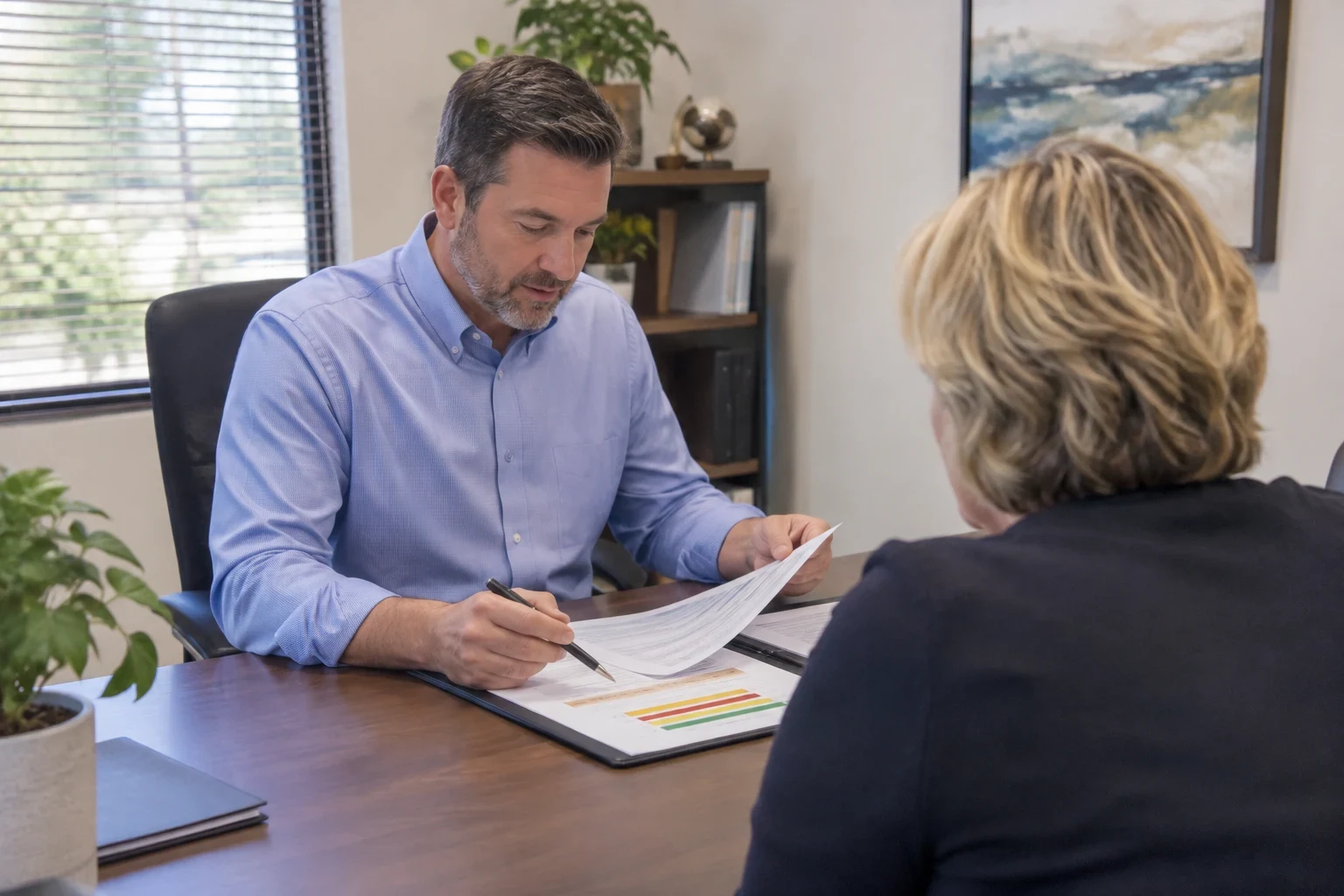
Every finding comes with proof. We keep copies and screenshots of what we reviewed, like a customer list, a lease clause or a month of payroll, and tie each one to a note on why it matters. You see what we saw at each step, not just a score.
Most owners in Lewisville and nearby towns come to us two to five years before they want out. That is the right window. It leaves time to fix what we find. If you are closer than that, the assessment still tells you where you stand.

What the Assessment Covers
- 01
Owner dependence
We map which jobs, customers and decisions still run through you. A company that stops when the owner takes a week off sells for less, or does not sell at all.
- 02
Financial records
We review three years of statements and tax returns and look for the gaps a buyer's accountant will find. That includes personal expenses run through the business and revenue that is hard to verify.
- 03
Customer and revenue mix
We check how much of your sales come from your top few customers and whether that work is under contract. Concentration is one of the first things a buyer discounts.
- 04
Contracts, leases and paperwork
Leases, vendor agreements, licenses and entity filings get read for assignment clauses and expiration dates. A lease that cannot transfer can stall a deal late in the process.
- 05
Team and key people
We look at who would stay, who holds the knowledge and whether anyone could run things after you. This matters most if you plan to pass the company to family or employees.
- 06
Your personal readiness
We talk about what you want after the exit, what number you need and what you would do on Monday morning. Plenty of owners are ready on paper and not ready in person.
Questions about Exit Readiness Assessment?
Call(972) 920-6668Signs It Is Time for an Assessment
You got an offer out of nowhere
Someone called asking if you would sell. Before you answer, you should know what they will find and what your company is worth.
Everything still goes through you
You approve every quote, hold every key account and answer every hard question. That is a risk a buyer will price in.
Your books mix business and personal
Trucks, phones and family on payroll can make sense for taxes. They also make your real earnings hard to prove.
You have a date in mind but no plan
You want out by a certain birthday or year. An assessment shows whether that date is realistic and what has to happen first.
A partner or family member wants a say
When more than one person has a stake, a written look at the company, backed by copies of the records, gives everyone the same facts to work from.
How the Assessment Works
- 1
A first conversation
We start with a phone or video call about your company and your goals. Most owners pair this with a free business valuation so they have a starting number.
- 2
Gathering the records
We send a plain checklist of what we need. You share what you have, and we work at our office or by video. Everything stays confidential.
- 3
Review with written findings
We go through each area and record what we found. Each finding links to the actual page or screenshot behind it, so nothing is a vague opinion.
- 4
A sit-down on what to fix first
We walk you through the results and rank the issues by how much they hurt value and how hard they are to fix. From there you decide on next steps, like value enhancement planning or a full exit planning engagement, or nothing at all.
What Affects the Cost
There is no single price, because no two companies are built the same way. We give you the cost up front after the first conversation, before any work starts. The free valuation costs nothing and comes with no obligation.
- Size and complexity
- A single-location company with one entity takes less time than one with several locations, entities or product lines.
- State of the records
- Clean, current books move fast. If statements need to be pulled together or reconciled first, that adds time.
- Number of owners
- Partners, family shareholders or a buy-sell agreement mean more paperwork to read and more people to talk with.
- How deep you want to go
- Some owners want a focused look at the two or three biggest risks. Others want every area covered before a sale or succession.
Exit Readiness Assessment Questions
How is this different from a business valuation?
A business valuation tells you what your company is worth today. The assessment tells you why it is worth that and what is holding the number down. Many owners get both, starting with the free valuation.
Will my employees find out?
Not from us. The work is confidential, and we do it at our office or by phone and video, not on your floor. You decide who on your team, if anyone, gets involved.
I am not planning to sell for years. Is this too early?
No. Early is better. The fixes that raise value most, like reducing owner dependence or spreading out your customer base, take a few years to show up in the numbers.
What do I actually get at the end?
You get written findings for each area, the supporting documents and screenshots behind every finding, and a ranked list of what to work on. You keep all of it, whether you work with us after or not.
Does this commit me to selling?
No. There is no pressure and no obligation to sell. Some owners use the results to sell, some to hand off to family, and some just to run a stronger company.

See Where Your Company Stands
Start with a free business valuation, or a 20-minute call with our co-founder to talk through your situation. Either way, you will know more than you did before.