ServicesValue Enhancement Planning
Value Enhancement Planning in Lewisville
Most companies sell for less than they could, because buyers price in risk. We find the things that cut your price, rank them, and work through them with you. You see what we found and what changed at every step, long before any sale talk starts.
What value enhancement planning is
Value enhancement planning is the work between knowing what your company is worth and getting paid for it. A buyer looks at your business and asks one question: how much of this walks out the door when the owner does? Every answer that worries them comes off the price.
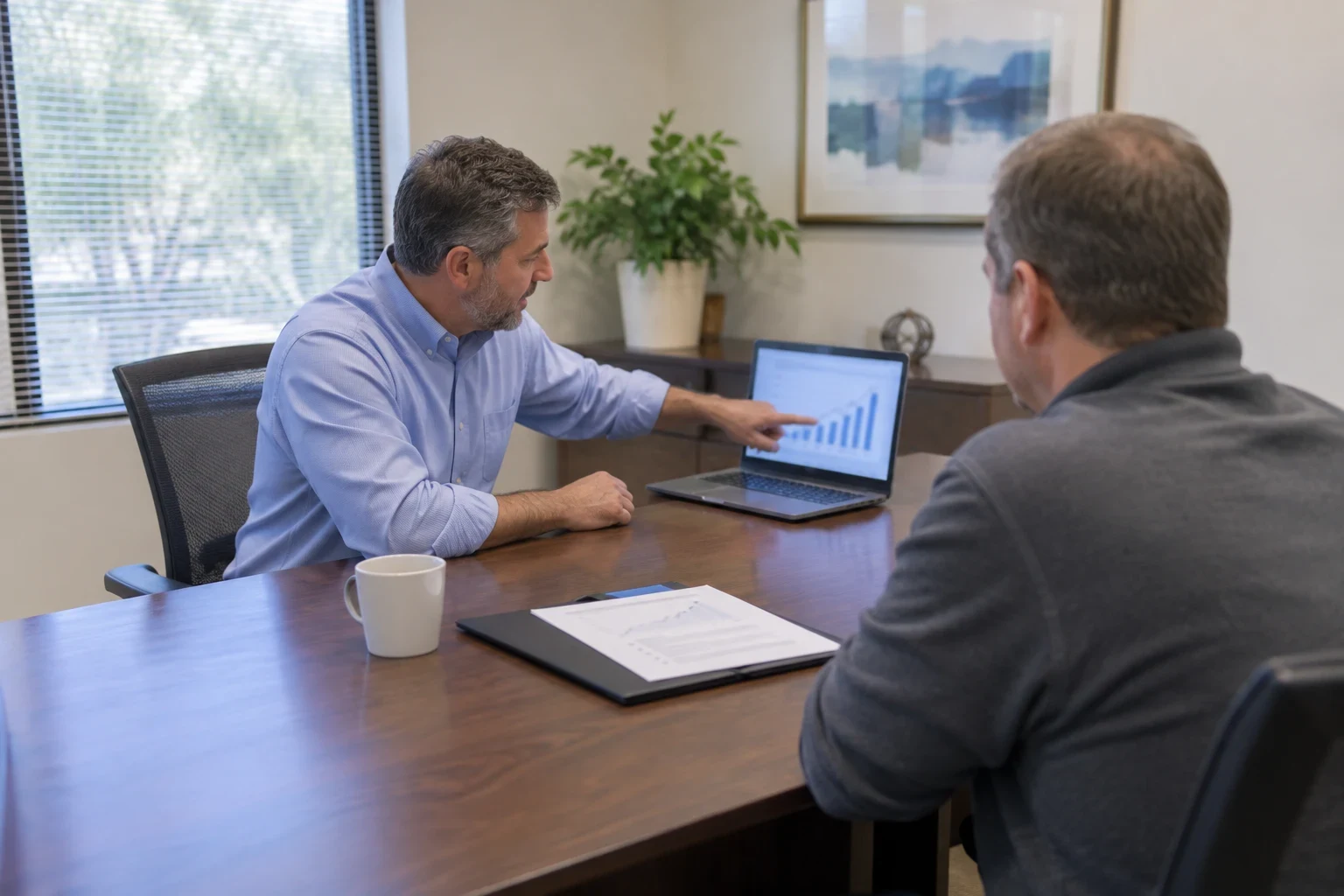
We start from a valuation, then go driver by driver. Customer concentration, how much runs through you, how clean the books are, whether key people and contracts will stay. Each finding is written down with the numbers behind it, and we keep snapshots of those reports so you can see the before and the after side by side.
It's the right call when a sale is a few years out, or when you have no plans to sell but want a stronger company either way. Plenty of owners around Lewisville start here and decide the rest later.

What the work includes
- 01
A starting valuation
We begin with a business valuation so every change has a number to measure against. It shows your earnings, the multiple a buyer might apply, and the gap you're working to close.
- 02
Owner-dependence review
We map which customers, decisions and relationships only run through you. Then we plan how to hand them to people who will stay after you leave.
- 03
Customer and revenue mix
If one customer brings in a large share of sales, buyers discount for it. We look at concentration, contract terms and how much of your revenue repeats year to year.
- 04
Cleaner financials
We work with your CPA to separate personal expenses, document add-backs and produce statements a buyer's accountant can follow without a long phone call.
- 05
A ranked action plan
Not every change is worth the effort. We rank each item by how much value it adds and how hard it is, and you choose what to take on first.
- 06
Progress records
At each check-in you get a short record of what we found, what was done and where the numbers stand now, with snapshots of the reports we used.
Questions about Value Enhancement Planning?
Call(972) 920-6668Signs your company needs this work
Everything runs through you
If you can't take two weeks off without the phone ringing, a buyer will notice the same thing. That dependence lowers the price or ties you to a long earnout.
One customer is too big
When a single account makes up a big slice of revenue, the business looks fragile from the outside, even if that customer has been loyal for years.
Your books need explaining
If your real profit depends on a conversation about what's personal and what's business, buyers will assume the lower number.
The valuation came in low
A number below what you need to retire is not the end of the story. It's a list of things to work on.
Handshake deals and nothing written down
Supplier terms, customer agreements and know-how that live in people's heads don't transfer well. Buyers pay less for what they can't see on paper.
How the work runs
- 1
A free valuation to start
We begin with a confidential look at your financials and a valuation. You learn where you stand, with no obligation to go further.
- 2
Find the value gaps
We meet at our office or by phone and video and go through each value driver. You get a written list of findings, the numbers behind them and snapshots of the source reports.
- 3
Build the plan
We rank the gaps, assign a person and a date to each, and agree on what success looks like in numbers.
- 4
Work it and check in
We meet on a set schedule, usually monthly or quarterly. Each check-in shows what was done and how the numbers moved, so you see progress instead of taking our word for it.
- 5
Value it again
At the end of a cycle we run the valuation again. That tells you what the work added and whether it's time for exit planning or another round of building.
What moves the cost
We don't set a fee until we've seen your numbers, because the work depends on what we find. The free valuation shows us that. After it, you get a written scope with the fee spelled out before any work starts.
- Size and complexity
- More locations, product lines or legal entities mean more to review and more moving parts in the plan.
- State of the books
- Clean, accrual-based statements make the work faster. If records need rebuilding first, that adds time.
- How many gaps you take on
- Some owners work on two priorities. Others work the whole list. You choose the scope.
- Length of the engagement
- A one-year plan with quarterly check-ins is a smaller job than a three-year plan with monthly meetings.
- Coordination with your advisors
- If your CPA, attorney or banker need to be part of the work, we plan time for those meetings.
Questions owners ask about value enhancement
How long before I see a change in value?
Some changes show up within a few months, like cleaning up add-backs or getting key customers on written contracts. Bigger shifts, like building a team that runs the company without you, usually take a year or more. That's why we suggest starting well before you want to sell.
Do I have to be planning to sell?
No. Value work makes a company stronger whether you sell, pass it to family or keep running it. There's no pressure, and no obligation to sell.
Who on my team will know we're doing this?
Only the people you choose to tell. We keep what we learn about your company private, and we meet at our office or by phone and video, so nobody at your workplace sees an advisor coming and going. You decide if and when key staff get pulled in.
How is this different from an exit readiness assessment?
An exit readiness assessment tells you how prepared you are to leave. Value enhancement planning is the work that follows: picking the gaps that cost you the most and closing them, with records of what changed.
What do you need from me to get started?
Usually three years of financial statements and tax returns, plus a conversation about how the business runs day to day. We'll tell you on the phone exactly what to pull together.

Find out what your company could be worth
Start with a free business valuation, or a 20-minute call with the co-founder if you'd rather talk first. We work with owners in Lewisville, Flower Mound, Carrollton and the towns around them.